
Hybrid vs laminate flooring
A practical comparison for Melbourne homeowners choosing between two durable timber-look flooring options.
Hybrid and laminate flooring sit close together on most Melbourne shortlists, and it is easy to see why. Both give a convincing timber look, both install as floating click systems, and both are far more practical for family life than solid timber. Stand the two planks side by side and many people cannot tell them apart. The differences that matter are underneath the surface, and they decide how each floor behaves in a real home over many years.
The biggest distinction comes down to what the plank is made of. Hybrid is a rigid composite plank built around a stone or plastic core (usually an SPC-style construction) that is waterproof or highly water-resistant and very stable. Laminate is built around a high-density fibreboard (HDF) core, topped with a printed decor layer and a tough wear layer, which gives sharp, realistic looks at a lower price but leaves the core vulnerable if water is allowed to sit. Neither is simply better. The right answer depends on which rooms you are covering, how much moisture they see, and where you want your budget to go. If you would rather compare both in your own rooms, our mobile flooring showroom Melbourne service brings samples to you.
Water resistance is the key difference
Water resistance is where the two part ways most clearly, and for many Melbourne homes it is the deciding factor. Hybrid uses a mineral or plastic core that does not absorb water, so spills, mopping and the occasional overflow are far less of a worry. A well-made hybrid floor handles a busy kitchen or laundry without swelling, which is why it is so popular for whole-home installs.
Laminate is a different story at the core. The HDF is essentially compressed wood, so if water finds the joints and sits there, the edges can swell and lift at the seams. Most modern laminates are surface water-resistant and cope well with quick wipe-ups, but they are not built for pooling water. That is why laminate suits living areas and bedrooms rather than wet zones. If you are weighing up waterproof flooring options across the whole house, hybrid generally has the edge.
Durability, appearance and comfort
Both floors are built to take punishment, which is part of their appeal for households with kids and pets. Laminate is genuinely hard-wearing and often rated very highly for scratch resistance thanks to its dense wear layer, so it shrugs off dragged chairs, paws and grit in dry rooms. Hybrid is also very durable and adds a rigid, dimensionally stable plank that resists dents and copes with heavy traffic, while its moisture-proof core keeps performing in conditions that would slowly wear at a laminate seam. Hybrid is the more forgiving all-rounder; a good laminate can match or beat it on pure scratch resistance in the right room. You can see the range we carry on our hybrid flooring page.

On looks, this is the closest contest of all. Laminate has a long history of sharp, crisp, highly realistic decors, with deep grain texture and natural colour variation across planks. Hybrid has caught up fast and now offers beautiful timber-look finishes with embossed textures, varied plank widths and matte sheens. The real question is less which technology looks better and more which decor, colour and plank size suits your space, and that changes the moment you see the boards in your own lighting.
Comfort follows the construction. Hybrid planks are rigid and solid, giving a planted feel underfoot, and with the right underlay they sound quieter and warmer than people expect from a stone core. Laminate can feel slightly firmer and, in large rooms, a touch more hollow if the acoustic underlay is skimped on. A good underlay closes most of that gap, so both can be made comfortable and quiet, but hybrid tends to feel more substantial straight out of the box.
Stability with temperature and light
Melbourne homes deal with real temperature swings, and floors near big windows or sliding doors can heat up considerably. Hybrid's rigid composite core is very stable and resists the expansion and contraction that troubles other timber-look products, so it copes well in sun-exposed and seasonally variable rooms. Laminate is reasonably stable too, but its timber-based core is more sensitive to moisture-driven movement, and large temperature swings ask more of the expansion gaps. For sunrooms, north-facing living areas and homes with lots of glazing, hybrid is usually the more relaxed choice.

Installation, maintenance and cost
Installation is similar for both. They are floating click-lock systems that lay over a level subfloor with the correct underlay and expansion gaps, with no glue or nails into the slab, so either is relatively fast to fit and can often go over existing hard floors. Our flooring installation Melbourne team handles the subfloor prep, which is where most of the long-term performance is won or lost. Maintenance is easy on both, with regular sweeping or vacuuming and a damp mop. The difference is how forgiving they are of mistakes: hybrid tolerates wetter cleaning and a missed spill, while laminate prefers a well-wrung mop and prompt wipe-ups. On cost, laminate is generally more affordable, especially at entry level, while hybrid sits a step higher. The table below lists hybrid first and laminate second.
| Feature | Option 1 | Option 2 |
|---|---|---|
| Core construction | Rigid stone or plastic composite core (SPC-style). | High-density fibreboard (HDF) core with printed decor. |
| Water resistance | Waterproof to highly water-resistant, suits wet areas. | Surface water-resistant; core can swell if water sits at seams. |
| Durability and scratch | Very durable, dent-resistant and stable underfoot. | Hard-wearing with strong scratch resistance in dry rooms. |
| Appearance and realism | Natural timber looks with embossed, matte finishes. | Sharp, crisp, highly realistic printed decors. |
| Stability with heat | Very stable in sun-exposed and variable rooms. | Stable, but more sensitive to moisture-driven movement. |
| Cost | Slightly higher than laminate. | More affordable, strong value for dry rooms. |
| Best rooms | Whole home including kitchens, laundries and wet areas. | Living areas and bedrooms; avoid wet zones. |
Which to choose for each room
With sensible care, both floors last well over a decade. Hybrid often holds an edge on longevity in demanding spots because moisture, the most common cause of premature failure in timber-look floors, simply affects it less. Laminate can match a long life in dry, lower-risk rooms where its wear layer does the heavy lifting.
Room by room, the logic is straightforward. For kitchens, laundries, bathrooms, hallways, apartments and open-plan living, hybrid is usually the safer choice, and it lets you run one consistent floor through the whole home; our guide to the best flooring for kitchens goes deeper on wet rooms. For bedrooms, formal lounges and budget-led renovations in dry areas, laminate flooring is an excellent value pick. Many homeowners also weigh hybrid against premium timber, which we cover in engineered timber vs hybrid flooring.
Hybrid vs laminate flooring FAQs
Is hybrid or laminate flooring better for water resistance?+
Hybrid is the stronger choice for water. Its stone or plastic core does not absorb moisture, so it suits kitchens, laundries and wet areas. Laminate has an HDF core that can swell if water sits at the seams, so it is better kept to dry rooms.
Which is more affordable, hybrid or laminate flooring?+
Laminate is generally more affordable, especially at entry level, which makes it strong value for bedrooms and dry living areas. Hybrid usually costs a little more but adds whole-home water resistance and stability.
Can I use laminate flooring in a kitchen?+
You can, but it is riskier. Modern laminate handles quick spill clean-ups, but standing water near sinks and dishwashers can swell the core over time. For kitchens we usually recommend hybrid flooring instead.
Do hybrid and laminate install the same way?+
Yes. Both are floating click-lock floors that lay over a level subfloor with the correct underlay and expansion gaps, with no glue or nails into the slab. Subfloor preparation matters most for long-term performance with either product.
How can I decide between hybrid and laminate?+
Compare physical samples in your own rooms. Colour, plank size, texture and sheen all shift under home lighting. Our mobile showroom brings both options to you so you can choose with confidence.
Related flooring advice

Engineered Timber vs Hybrid Flooring
Compare engineered timber and hybrid flooring for Melbourne homes, including appearance, durability, maintenance, moisture resistance and best rooms.
Read guide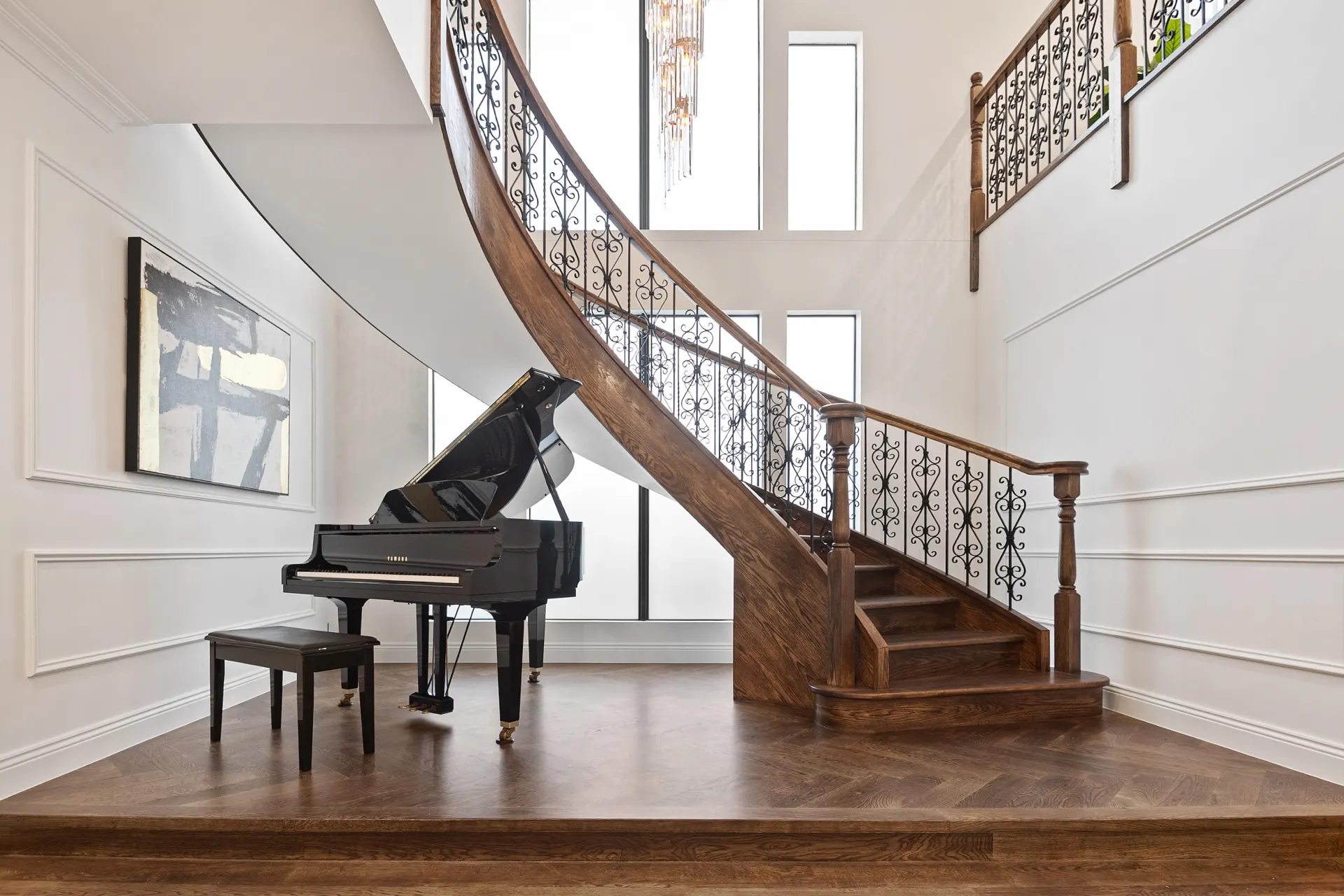
Doncaster East: A Full-Home Transformation
A full-home flooring transformation in Doncaster East: engineered oak herringbone through the living zones, with plush wool carpet in the bedrooms.
View pageWhat can we help you with?

From browsing here to your new floors
TMBR is a mobile flooring showroom. You choose from our range, we bring the samples to your home, then we supply and install.
- Step 1
Browse the range
Shortlist timber, hybrid, parquetry or carpet from our range.
- Step 2
Book a free visit
Pick a time that suits, including evenings and weekends.
- Step 3
We come to you
We bring the curated samples to your home.
- Step 4
Measure & quote
We compare options in your light, measure and quote on site.
- Step 5
Supply & install
Our local, fully insured team supplies and fits your floors.
Ready to sort your new floor?
Call for a quick chat, or send a few details for a free measure and quote. We'll bring the samples, measuring and quoting to your door, right across Melbourne.
Call 0449 156 789 · Evenings and weekends available, right across Melbourne.
Pick a time that suits you
Prefer to lock it in yourself? Choose a slot for a free, no-obligation chat about your flooring project, and we’ll bring the mobile showroom to you.